
Ground Ready for Structures That Last
Site Prep and Excavation Services in Festus for properties requiring grading, clearing, and soil work before landscape or construction projects
Projects fail when ground isn't graded correctly or when subsurface debris remains buried under new installations. You're working with excavation and site preparation that addresses drainage slope, soil compaction, and clearing to establish stable ground before patios, retaining walls, or driveways are built. What happens during this phase determines whether structures settle unevenly or water pools against foundations once the project is finished.
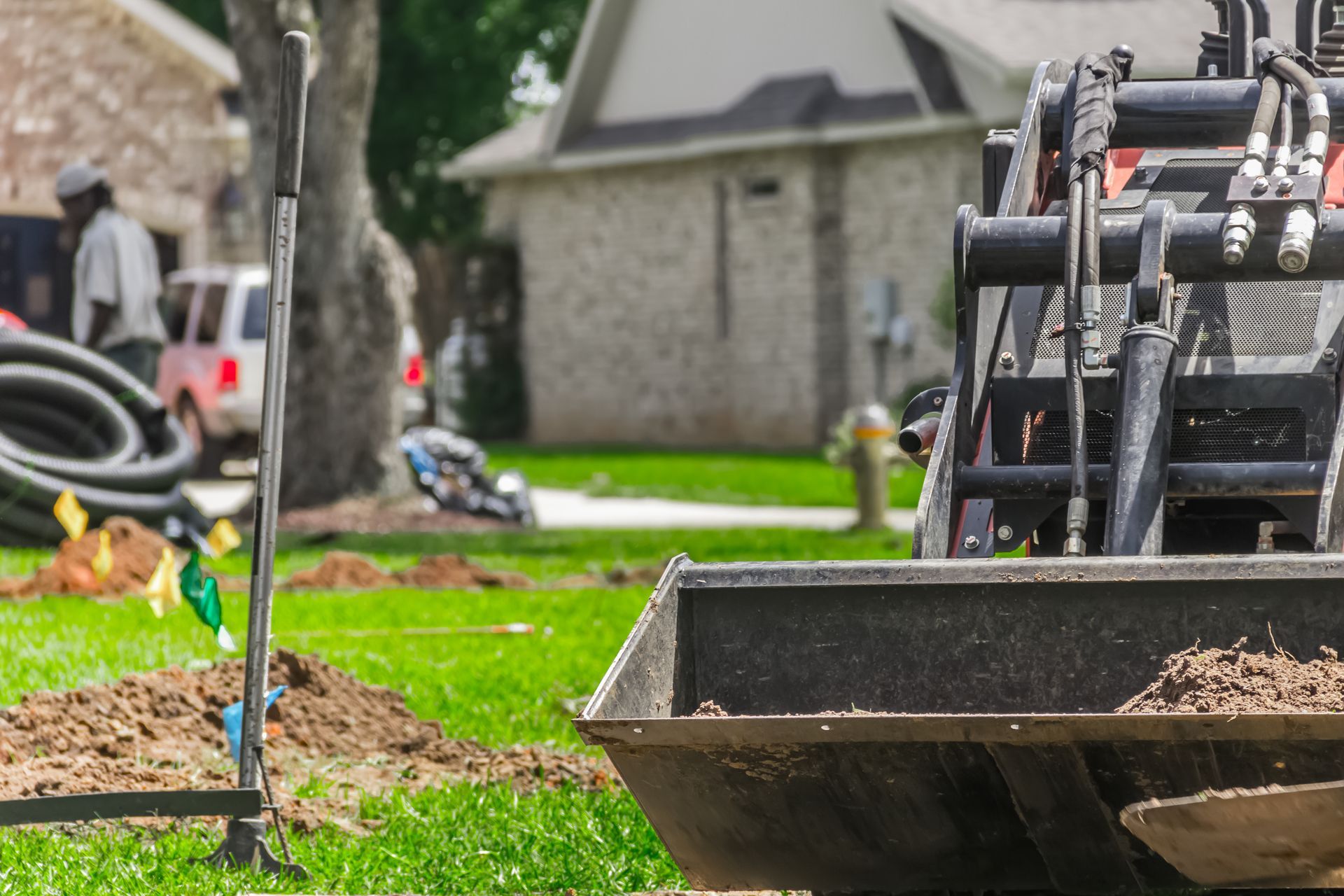
Big A's Lawncare operates grading and excavation equipment to remove topsoil, clear vegetation, and shape the site according to project plans that account for water runoff and load-bearing requirements. Attention to detail during excavation means checking for rocks, roots, and inconsistent soil layers that cause settling, then compacting fill material in lifts to prevent voids under hardscapes. Safe equipment operation includes marking utility lines and maintaining stable trench walls during deeper excavation work.
Arrange a consultation to review your project site and discuss grading requirements before excavation begins.
Why Proper Preparation Prevents Long-Term Failures
Site preparation starts with surveying existing grade to identify where water currently flows, then adjusting slope to direct runoff away from structures and toward drainage areas. Excavation depth varies based on what's being installed—shallow grading for sod or mulch beds, deeper cuts for retaining wall footings or underground drainage lines. Compaction testing ensures fill material is dense enough to support weight without sinking over time.
Once grading is complete, you'll see a level or sloped surface free of soft spots and standing water, with clear boundaries matching your project layout. Proper preparation means pavers remain level instead of tilting as soil settles, and drainage systems function as designed instead of clogging with sediment from unstable soil. The work creates a foundation that performs correctly for years rather than requiring repairs within the first season.
Excavation includes clearing vegetation, removing unsuitable soil, shaping grade, and compacting fill material to project specifications. The service does not include hauling away excess soil or debris, permit acquisition, or utility location services, which are arranged separately based on project scope and local requirements.
Homeowners planning outdoor projects often ask about site preparation steps, timing, and what conditions require excavation before construction begins.
What site conditions require excavation before installing hardscapes?
Uneven grade, poor drainage, or unstable soil all need correction through excavation and compaction, since building directly on unprepared ground leads to settling and structural movement within months.
How deep does excavation need to go for a patio or walkway?
Depth depends on material type and soil conditions, but most installations require four to six inches of compacted base material below the surface to prevent sinking and maintain a level plane.
Why is soil compaction important during site prep work?
Loose fill material compresses under weight, causing surfaces to sink and crack, while properly compacted soil in thin layers creates a stable base that resists settling even with freeze-thaw cycles common in Missouri.
When should site preparation be scheduled relative to other project phases?
Excavation and grading happen first, before materials are delivered or construction begins, to avoid damaging finished work or blocking access with equipment once other trades arrive on-site.
What happens to the topsoil removed during excavation?
Topsoil is typically stockpiled on-site for reuse in planting beds or lawn areas, while subsoil and unsuitable material may need removal depending on project plans and available space for redistribution.
Common Questions About This Service
Big A's Lawncare provides project-specific preparation tailored to your site's drainage, soil type, and planned improvements. Request an estimate to discuss excavation scope and equipment access for your outdoor project.